

Related posts
Cleaning a Stainless Steel Litter Pan: A Weekly Routine

A short, repeatable routine for keeping a steel litter pan neutral — what to use, what to avoid, and how often to do a full change.
Litter ends up on the floor by three different routes, and the fix for one does nothing for the others. Work out which you are dealing with before buying anything.
Look at where the litter lands. A spray of granules in an arc behind the box means the cat is digging vigorously and the walls are too low to contain it.
Fix: higher walls. A high-sided pan or an enclosed box contains the arc. Reducing the litter depth slightly also helps, though not below about two and a half inches or the cat cannot cover properly.
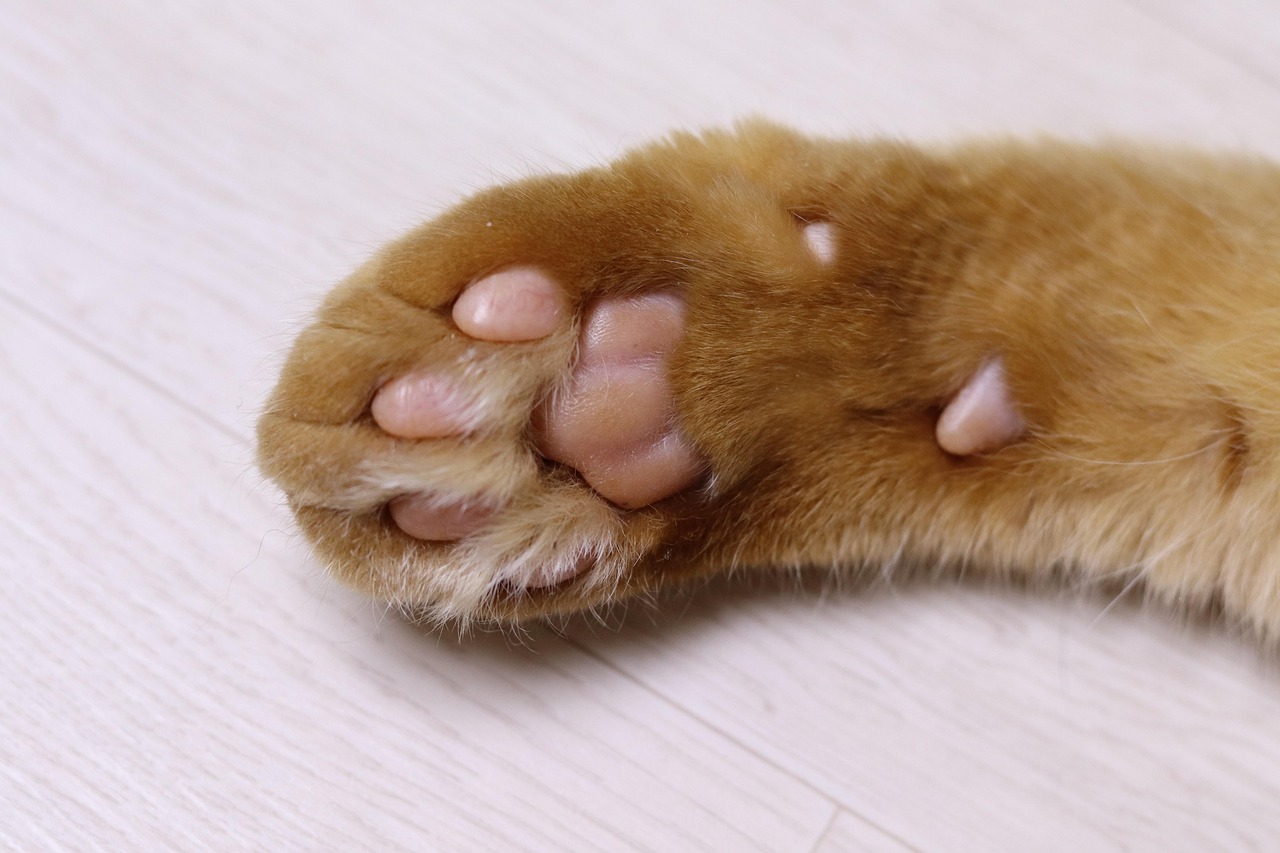
A trail of individual granules leading away from the box, thinning as it goes, is tracking proper. Fine-grained clumping litters track the most because the particles lodge between the toes.
Fix: a top-entry box handles this better than anything else, because the lid grate catches granules as the cat climbs out. Failing that, a textured mat immediately outside the box, with the cat forced to walk over it, catches a good proportion. Larger-grain litter tracks less but many cats prefer fine textures, so this can be a trade against acceptance. See top-entry boxes.
Litter thrown several feet away in a straight line usually means the cat is bolting from the box. Something is startling it — a washing machine spin cycle, a dog, a door that swings, foot traffic past the doorway.
Fix: move the box. No product corrects for a location the cat does not feel safe in, and a cat that bolts from a box is also a cat at risk of stopping using it.
The mats that work have deep ridges or a honeycomb structure that granules fall into and stay in, and they need to be wide enough that the cat cannot step over them in a single stride — about 24 inches deep from the box is a sensible minimum. Flat rubber mats look tidy and catch very little.
Empty the mat rather than sweeping around it. Most designs open or lift for tipping.
Do not reduce litter depth below what the cat needs in order to cut tracking. A cat that cannot dig and cover will look for somewhere else to go, and a litter avoidance problem is far worse than sweeping. Do not switch to a scented litter to compensate either; it addresses nothing here.
You can reduce tracking by a large margin. You cannot get it to zero with a cat that digs. A top-entry box plus a ridged mat plus hard flooring is about as far as the equipment goes, and it turns a daily sweep into a weekly one.
Grain size is the main variable. Very fine clumping litters lodge between the toes and travel furthest. Larger-grain clay, pellets and crystal litters track noticeably less because the particles are too big to sit in the paw.
The catch is acceptance. Many cats prefer a fine, sand-like texture because it is closest to what they would dig in naturally, and switching abruptly to a coarse pellet is one of the more reliable ways to get a cat to stop using a box. If you want to change, mix the new litter into the old at increasing ratios across two weeks rather than swapping in one go.
The same amount of tracking is a two-minute sweep on tile and a recurring irritation on carpet, where granules work into the pile and stay. If you have any choice about where the box goes, put it on the hardest floor in the house. This single decision does more than most products.
With a top-entry box, a deep ridged mat and hard flooring, most households go from sweeping daily to sweeping weekly. Granules will still appear occasionally — a cat that digs will always carry a few out, and that is normal rather than a sign something is wrong.
If tracking suddenly gets much worse with no change in equipment, check the litter depth. An overfilled box throws far more over the sides than one kept at three inches.
If you want a recommendation for your specific layout, tell us the room and the flooring and we will suggest something sensible.
Mon–Fri 10:00–20:00 · Saturday 10:00–18:00 · Sunday 12:00–17:00